Sailgene Technology

Chromosome-Level Bat Genomes and Fossils Pinpoint the Origin of Powered Flight
2026
Telomere-to-Telomere (T2T) Genome
Bats
Case Study
Research Background
With more than 1,500 species, bats account for over one fifth of all living mammal species and are the only mammals capable of powered flight. They combine laryngeal echolocation, exceptional longevity, viral tolerance, and the smallest genomes known among mammals (approximately 2 Gb) — traits whose evolutionary origins have remained poorly resolved.
Reconstructing bat evolutionary history has been difficult for several reasons: convergent molecular and morphological traits generate conflicting phylogenetic signals; rapid speciation left behind extensive incomplete lineage sorting and introgression; chromosome-level genome assemblies were scarce; and the bat fossil record is sparse and highly fragmented. As a result, previous studies placed the origin of bats in North America, Africa, or Asia — and often disagreed on how the major bat lineages are related.
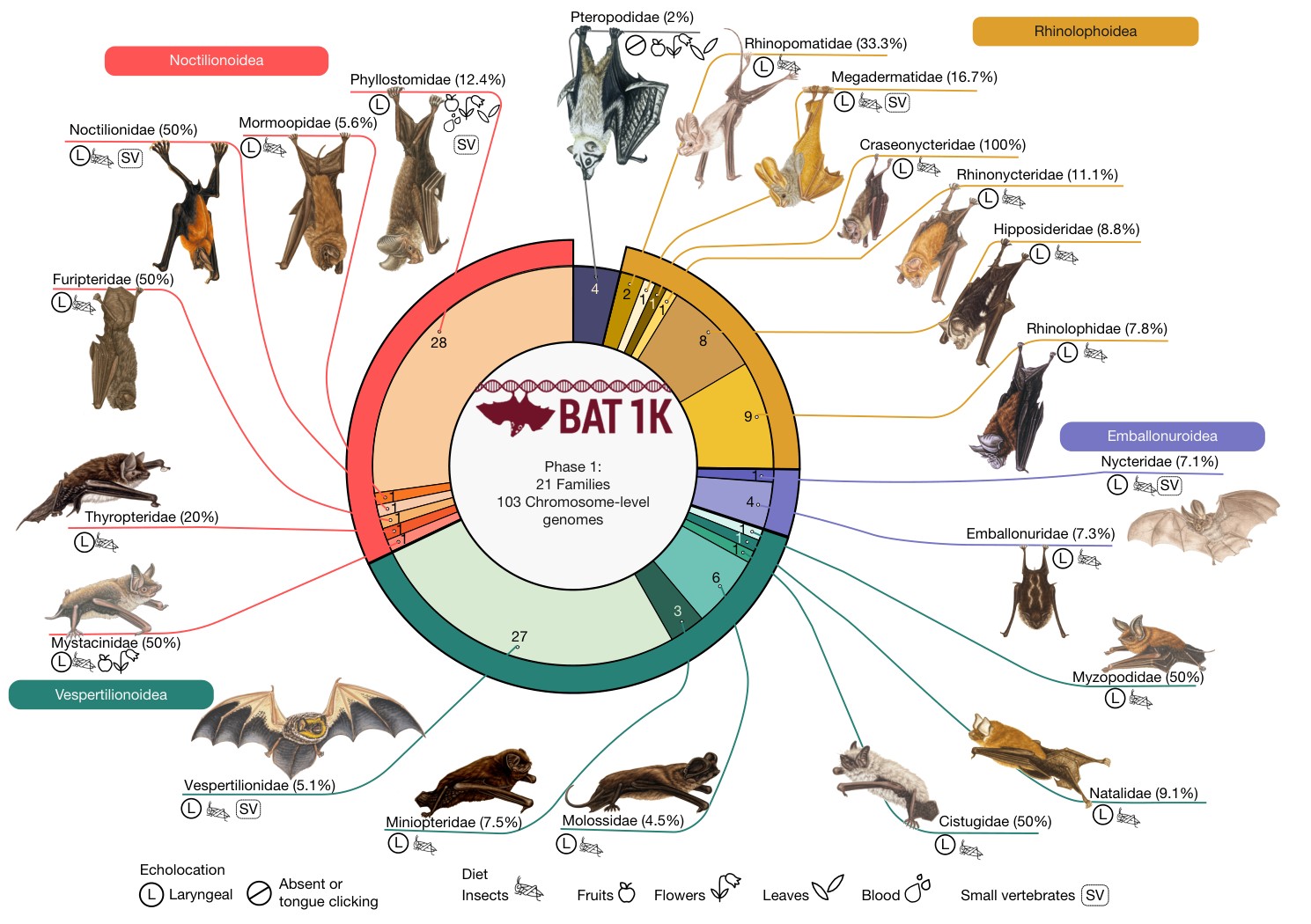
This study, phase 1 of the Bat1K consortium, set out to resolve these long-standing questions by combining chromosome-level, long-read genome assemblies from all 21 currently recognized bat families with a large morphological dataset of fossil and living bats.
Experimental Design & Technical Strategy
The researchers combined multiple sequencing technologies and analytical frameworks with complementary strengths:
- ONT long-read + Hi-C sequencing: 42 new reference-quality, chromosome-level genome assemblies representing 41 species, 26 of them haplotype-resolved, with contig N50 values from 6.4 to 102 Mb
- Existing high-quality assemblies: 62 additional bat species, bringing the dataset to 103 bat species plus 8 mammalian outgroups
- Gene and repeat annotation: TOGA identified 16,750 one-to-one orthologous genes; average gene completeness of the new assemblies reached 98.77%
Whole-genome alignments were built with two independent approaches (MULTIZ and Progressive CACTUS) against three reference genomes to avoid reference bias. The team then reconstructed phylogenies from protein-coding genes, neutrally evolving windows, "dark" SNPs, and whole chromosomes using coalescent (ASTRAL), maximum-likelihood (IQ-TREE2), and whole-genome (CASTER) methods. In parallel, a morphological matrix of 699 characters covering 65 species — including 44 pre-Quaternary fossils — was merged with neutral genomic sites and analyzed under a fossilized birth–death total-evidence dating model, followed by dispersal–extinction cladogenesis modeling of biogeography.
Key Results
1. A Revised Bat Family Tree
Across datasets and methods, all families were recovered as monophyletic, and the enigmatic Madagascan family Myzopodidae was placed as the earliest branch within Vespertilionoidea (bootstrap support = 100%), refuting its earlier placement within Noctilionoidea. Emballonuroidea was resolved as the sister group of Vespertilionoidea.
2. Introgression Explains Why Earlier Trees Were Misled
Only 22% of individual protein-coding gene trees supported the true placement of Myzopodidae. The dominant whole-genome signal was shown to be generated by pervasive introgression, while the underlying species tree was preserved in the low-recombination X chromosome recombination desert — a result that explains why earlier phylogenies based on protein-coding genes were systematically misled.
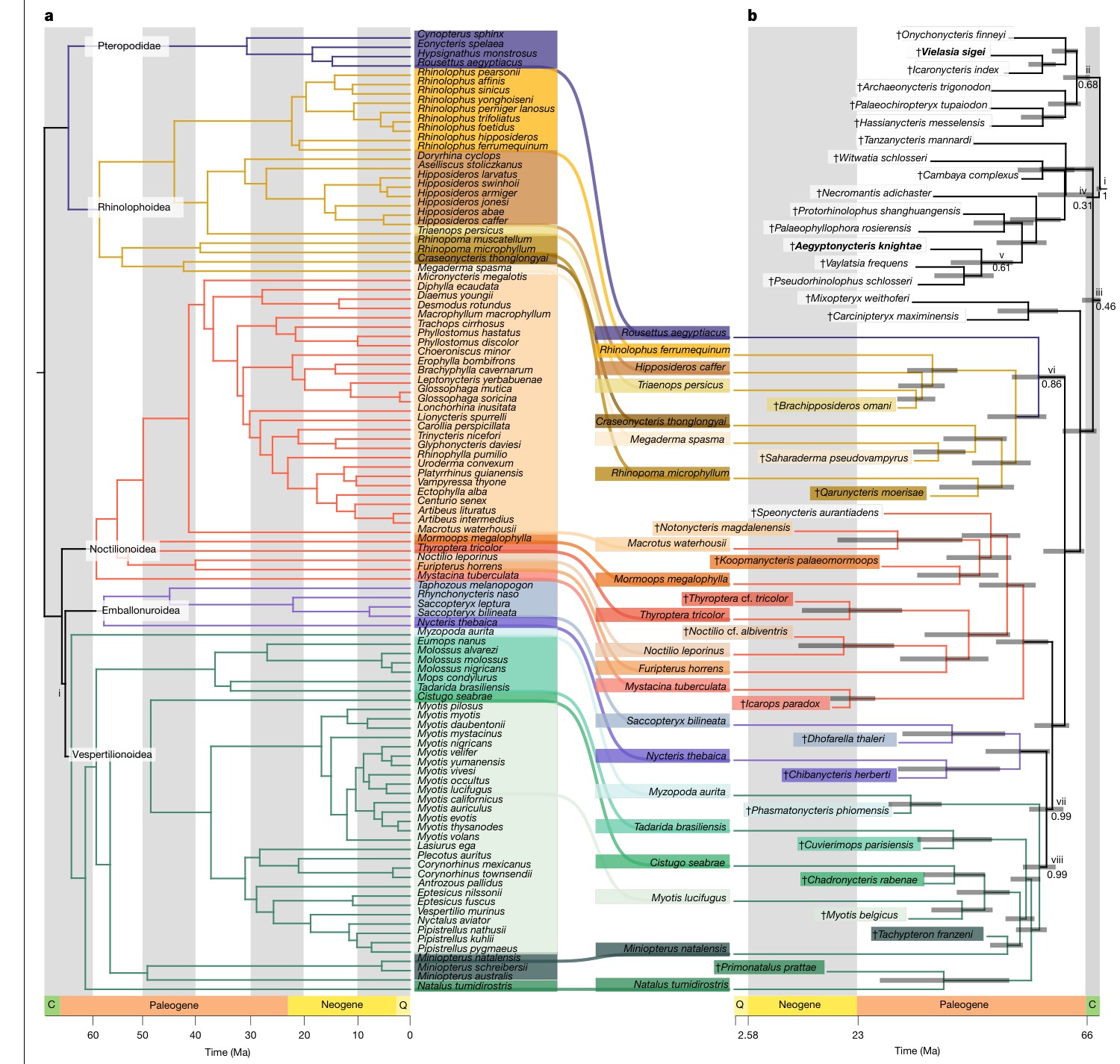
Figure 1, Morales et al., 2026. Genome assemblies per family, species coverage, feeding niches, and echolocation capabilities across Chiroptera.
3. Bats Originated in Europe in the Late Paleocene
Total-evidence dating placed the bat ancestor — and thus the origin of powered flight — in Europe in the late Paleocene (99.2% posterior probability), refuting previous African, Asian, and North American origin hypotheses. From a Europe–Africa hub, bats expanded repeatedly into the Americas, Asia, and Australia during a narrow window around the Paleocene–Eocene Thermal Maximum (~56 Ma). The Noctilionoidea reached the Americas from Europe via a North Atlantic route around 54 Ma, with transatlantic island-hopping from Africa explicitly rejected (0.27% posterior probability).
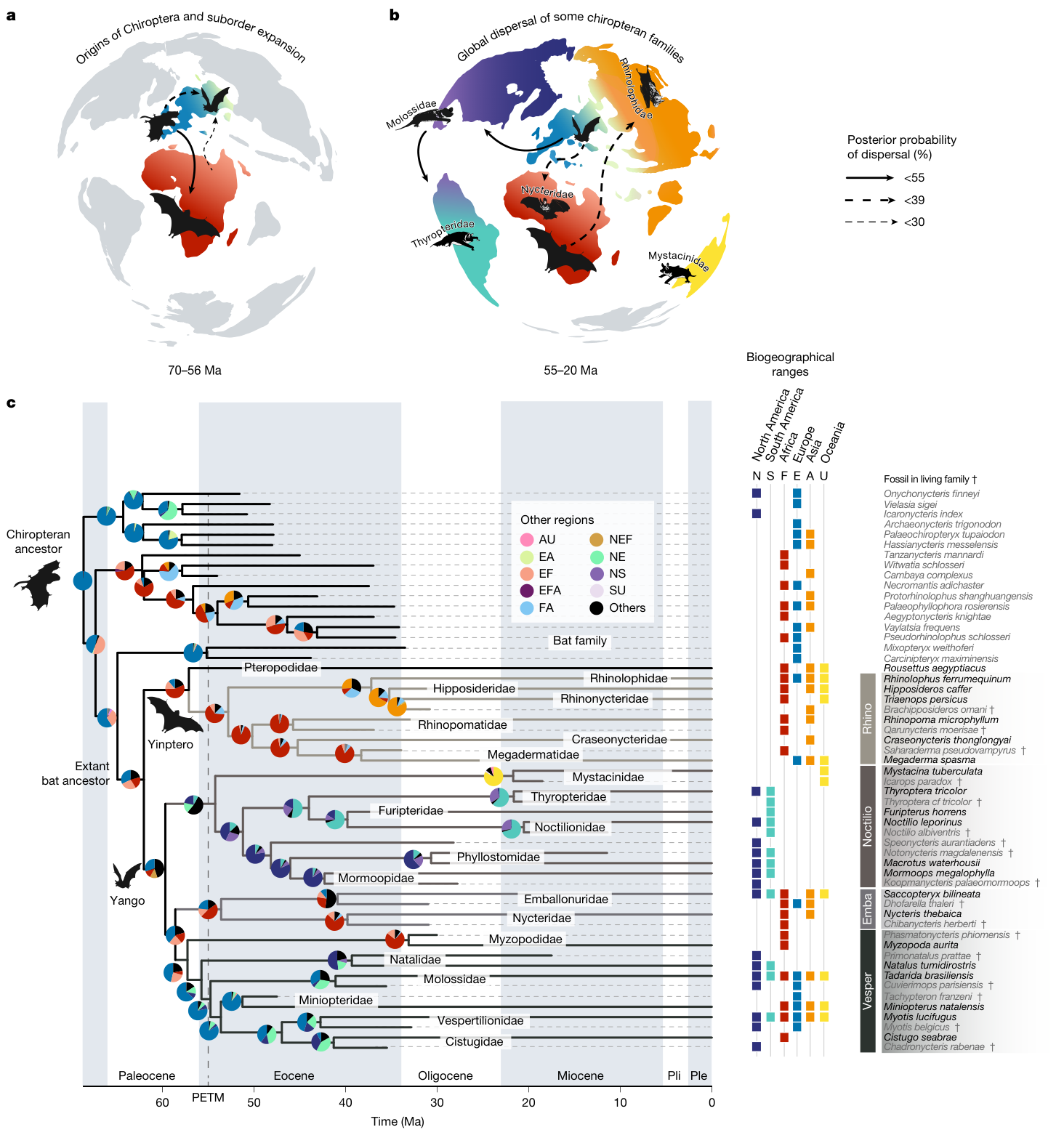
Figure 3, Morales et al., 2026. Fossilized birth–death tree with dispersal ranges showing the European origin of bats and subsequent global expansion.
4. Echolocation Predates Crown Bats, and Bat Genomes Evolved by Fusion
The fossil †Vielasia was placed within the oldest branch of bats (Eochiroptera), indicating that laryngeal echolocation evolved before the diversification of crown-group bats. Chromosomal reconstruction further identified 26 ancestral bat chromosomes and showed that modern bat karyotypes evolved mainly through chromosome fusions rather than fissions.
Scientific Significance
This study rewrites the evolutionary history of bats: it settles where powered flight began, when echolocation emerged, and how the major bat superfamilies are related. The finding that introgression — not the species tree — dominates the whole-genome signal is a cautionary lesson for any phylogenomic study of rapidly radiating groups.
The results also highlight the complementary roles of different sequencing technologies and data types. Chromosome-level long-read assemblies made whole-genome and chromosome-scale analyses possible; neutral genomic regions avoided the selection biases of protein-coding genes, which represent only about 2% of the genome; and fossil-informed total-evidence dating cut unrepresented basal branch lengths from roughly 73% to under 51%, reconciling molecular clocks with the fossil record.
Overall, the study demonstrates how chromosome-level reference genomes, integrated with morphology and fossils, can transform an unresolved phylogeny into a robust evolutionary framework — an approach that is directly transferable to other species-rich groups.
Related Sailgene Services
This study is particularly relevant to Nanopore Ultra-long Sequencing (PromethION Platform), Telomere-to-Telomere (T2T) Genome, Haplotype-Resolved T2T Genome, and Pan Genome services, which deliver the reference-quality, chromosome-level assemblies and multi-individual sampling needed to resolve complex regions, build gap-free references, and support population-scale comparative genomics.
Reference: Morales, A. E. et al., "Reference genomes and fossils revise bat family phylogeny and biogeography", Nature 658, 141–152 (2026).
Contact Us
If you are interested in our long-read sequencing services or potential collaboration, please contact us. Our team is ready to support your research with tailored solutions. We also welcome feedback from users to help us improve our services.

Contact Us
Add: One Innovation Drive, Suite B3-406, Worcester, MA 01605, USA
在线客服添加返回顶部
右侧在线客服样式 1,2,3 1
图片alt标题设置: SAILGENE TECHNOLOGY INC.
表单验证提示文本: Content cannot be empty!
循环体没有内容时: Sorry,no matching items were found.
CSS / JS 文件放置地