Sailgene Technology

ONT Only T2T Genome Assembly: Breaking the “No Gap” Barrier Introduction
Release time:2026-09-17 16:03:41
Introduction
For over a decade, telomere‑to‑telomere (T2T) genome assembly has been the holy grail of genomics – a complete, gap‑free reconstruction of every chromosome. A true T2T genome unlocks previously inaccessible regions: centromeres, telomeres, ribosomal DNA arrays, and long segmental duplications that harbour genes and regulatory elements critical for development, disease, and adaptation.
But here is the problem: achieving T2T has historically demanded ultra‑long Oxford Nanopore reads – sequences of at least 100 kb – which are expensive, experimentally challenging, and require ~40× more DNA than standard protocols. For clinical samples, non‑model organisms, or large‑scale population studies, ultra‑long reads are often simply not feasible.
What if you could achieve near‑T2T assembly using standard ONT simplex reads – the same affordable, widely available data you are already generating?
That is exactly what hifiasm(ONT) – the ONT-optimized version of the hifiasm assembler – delivers, in a breakthrough published in Nature on 4 February 2026 that eliminates the ultra-long read requirement, slashes computation time by an order of magnitude, and runs entirely on CPU.
Current Challenges: Why T2T Assembly Has Been So Hard
Challenge 1: The “Ultra‑Long Read” Bottleneck
Existing near‑T2T assemblers – Verkko, hifiasm(UL) – rely on ONT ultra‑long reads (>100 kb). Producing such reads requires tens of micrograms of high‑molecular‑weight DNA per sample – about 40 times the input of standard ONT kits. For clinical biopsies, field‑collected specimens, or precious samples, this is a deal‑breaker.
Challenge 2: The Recurrent Error Trap
ONT simplex reads are longer and cheaper than PacBio HiFi, but they carry systematic, non‑random sequencing errors. Existing haplotype‑resolved assemblers (hifiasm, HiCanu, LJA, Verkko) assume errors are random. With ONT simplex reads, the same errors recur across many reads, and standard error‑correction mistakenly treats these recurrent errors as genuine genetic variants. The consequence? Reads carrying recurrent errors are discarded, leaving insufficient coverage for accurate assembly. As the Nature paper states: “With the existing error‑correction approach, no reads remain available for correction.”
Challenge 3: The GPU Dependency
Some workflows attempt to correct ONT errors using deep‑learning tools like HERRO – but these require GPU resources and are computationally heavy. Many labs simply cannot afford such infrastructure.
How hifiasm(ONT) Solves the Problem
Developed by Haoyu Cheng, Han Qu, and Heng Li’s team, hifiasm(ONT) introduces three paradigm‑shifting breakthroughs:
Breakthrough 1: No More Ultra‑Long Reads
hifiasm(ONT) produces near‑T2T assemblies using standard ONT simplex reads – the same data generated with the standard Ligation Sequencing Kit. Ultra‑long reads are no longer required.
Breakthrough 2: Phasing‑Aware Error Correction
Instead of assuming random errors, hifiasm(ONT) leverages read‑phasing informationto distinguish true genetic variants from recurrent sequencing errors. It identifies “informative sites” supported by multiple reads, then uses a dynamic programming matrix to cluster compatible sites. Recurrent errors – which are incompatible with true haplotypes – remain unclustered and are correctly ignored. This elegant approach corrects ONT simplex reads without discarding useful data.
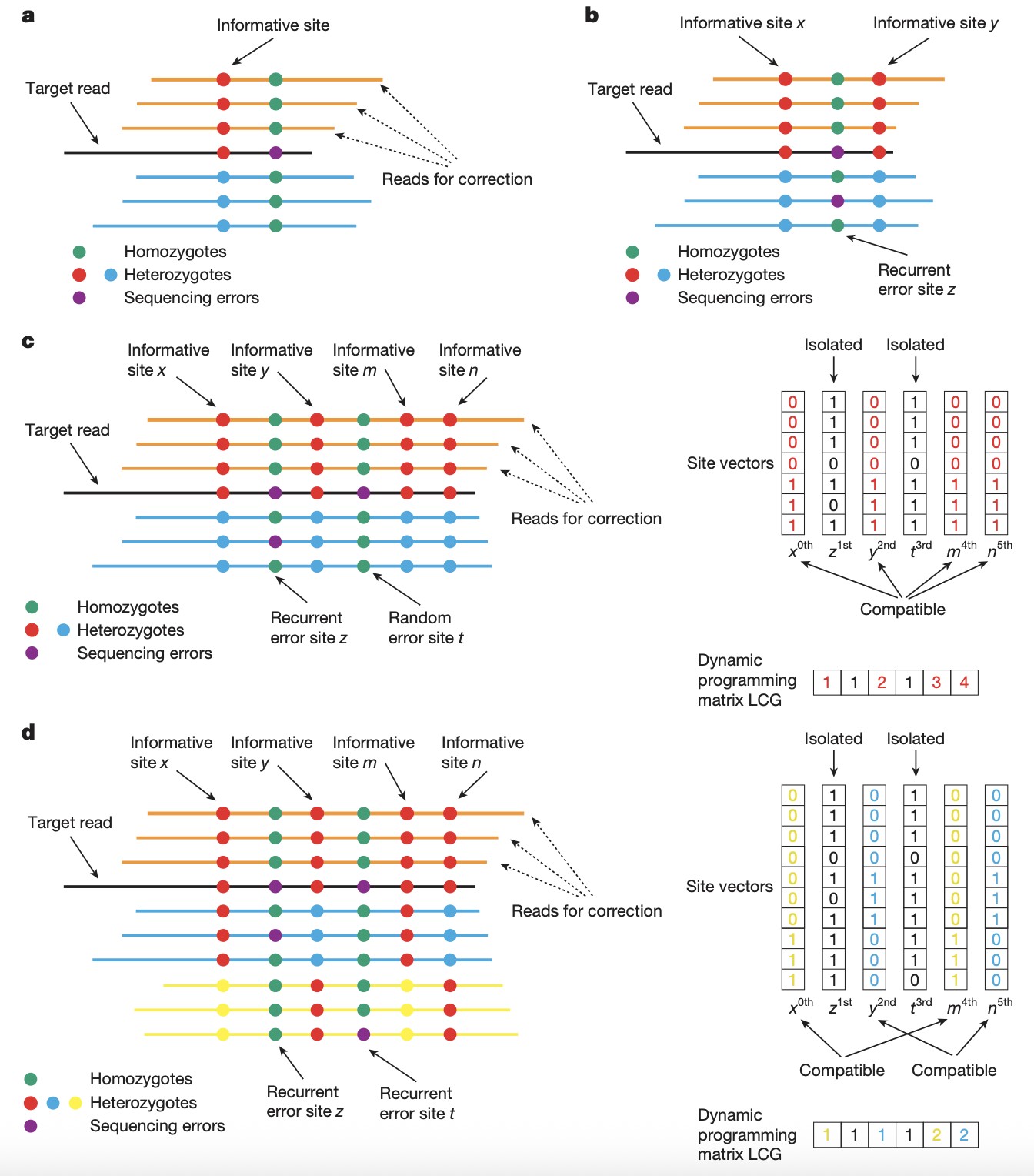
Figure 1. Error correction of ONT simplex reads.
Hifiasm(ONT) uses read‑phasing information to distinguish true heterozygous variants from recurrent sequencing errors. True variant sites (x, y, m, n) are mutually compatible and clustered together; recurrent error sites (z, t) remain unclustered and are ignored. This approach preserves more reads for assembly compared with existing error‑correction methods.
Source: https://doi.org/10.1038/s41586-026-10105-6.
Breakthrough 3: CPU‑Only, Order‑of‑Magnitude Faster
hifiasm(ONT) reduces computational demands by an order of magnitude compared to existing pipelines – and it runs entirely on CPU, with no GPU required.
Why this matters biologically: hifiasm(ONT) doesn’t just improve assembly quality – it democratises T2T genomics. What was once exclusive to well‑funded genome centres is now accessible to any lab running standard ONT sequencing.
Research Example: What hifiasm(ONT) Achieved in Human Genomes
Citation:
Cheng, H., Qu, H., McKenzie, S. et al. Efficient near‑telomere‑to‑telomere assembly of nanopore simplex reads. Nature 655, 166–173 (2026).
https://doi.org/10.1038/s41586-026-10105-6
In this landmark study, the team applied hifiasm(ONT) to multiple human samples using only standard ONT simplex reads – no ultra‑long reads, no GPU. The results were striking:
- Near‑T2T chromosomes:The algorithm reconstructed up to 22 telomere‑to‑telomere chromosomes in a single human assembly – a feat previously impossible without ultra‑long reads.
- Superior contiguity:In the HG002 diploid genome, hifiasm(ONT) assemblies showed substantially higher contiguity than PacBio HiFi assemblies, with comparable or better quality even within complex repetitive regions.
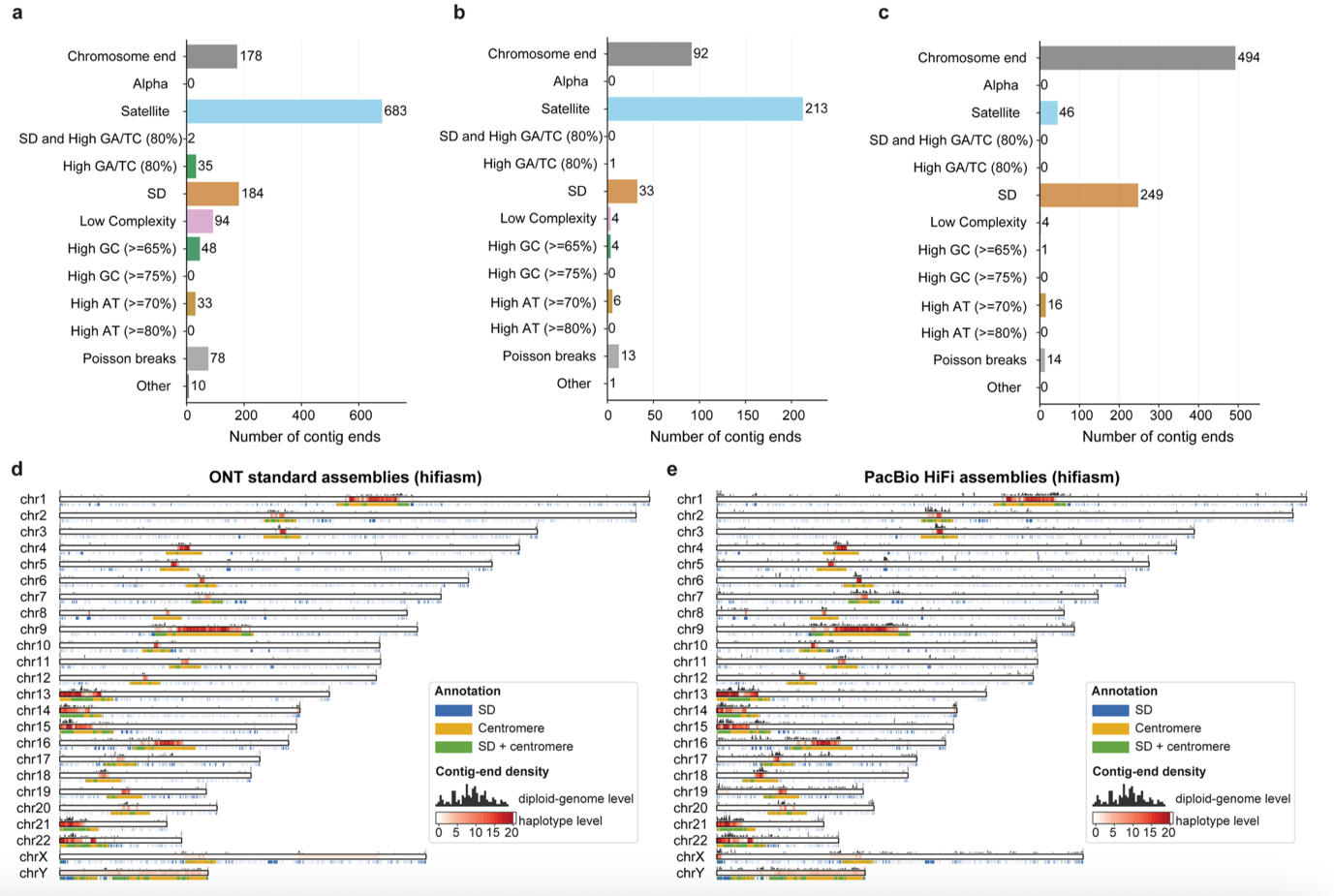
Figure 2. Genome‑wide distribution of assembly gaps in HG002 assemblies.
Compared with PacBio HiFi assemblies, ONT assemblies generated by hifiasm(ONT) resolved substantially more regions with high GA(TC) content, low complexity, and extreme GC(AT) composition — areas that have been historically difficult to assemble using standard sequencing technologies. ONT ultra‑long assemblies also resolved a substantially higher number of satellites, mainly from centromeric regions.Source: https://doi.org/10.1038/s41586-026-10105-6, Extended Data Fig. 4
Figure 2 shows the genome‑wide distribution of assembly gaps in HG002 assemblies. Compared with PacBio HiFi assemblies, ONT assemblies generated by hifiasm(ONT) resolved substantially more regions with high GA(TC) content, low complexity, and extreme GC(AT) composition — areas that have been historically difficult to assemble using standard sequencing technologies.
Beyond the reduction of assembly gaps, hifiasm(ONT) also demonstrated superior performance at the gene level. Using the HG002 Q100 reference genome from the same individual, the researchers counted how many genes remained unresolved in each assembly (Extended Data Table 3). PacBio HiFi assemblies left hundreds of genes unresolved, many of which lie in medically relevant and difficult‑to‑assemble loci. By contrast, hifiasm(ONT) reduced the number of unresolved genes by an order of magnitude, achieving gene‑level resolution comparable to assemblies generated with costly ultra‑long reads – even when using only standard ONT simplex reads.
Why this matters: This confirms that hifiasm(ONT) doesn't just make genomes more contiguous; it makes them biologically complete — resolving genes in regions that other technologies simply cannot access
- Clinical resolution:The algorithm resolved the SMN1 and SMN2 gene pair – near‑identical sequences whose biallelic pathogenic variants cause spinal muscular atrophy. hifiasm(ONT) accurately assembled both copies using ONT standard simplex reads, outperforming PacBio HiFi and Verkko+HERRO.
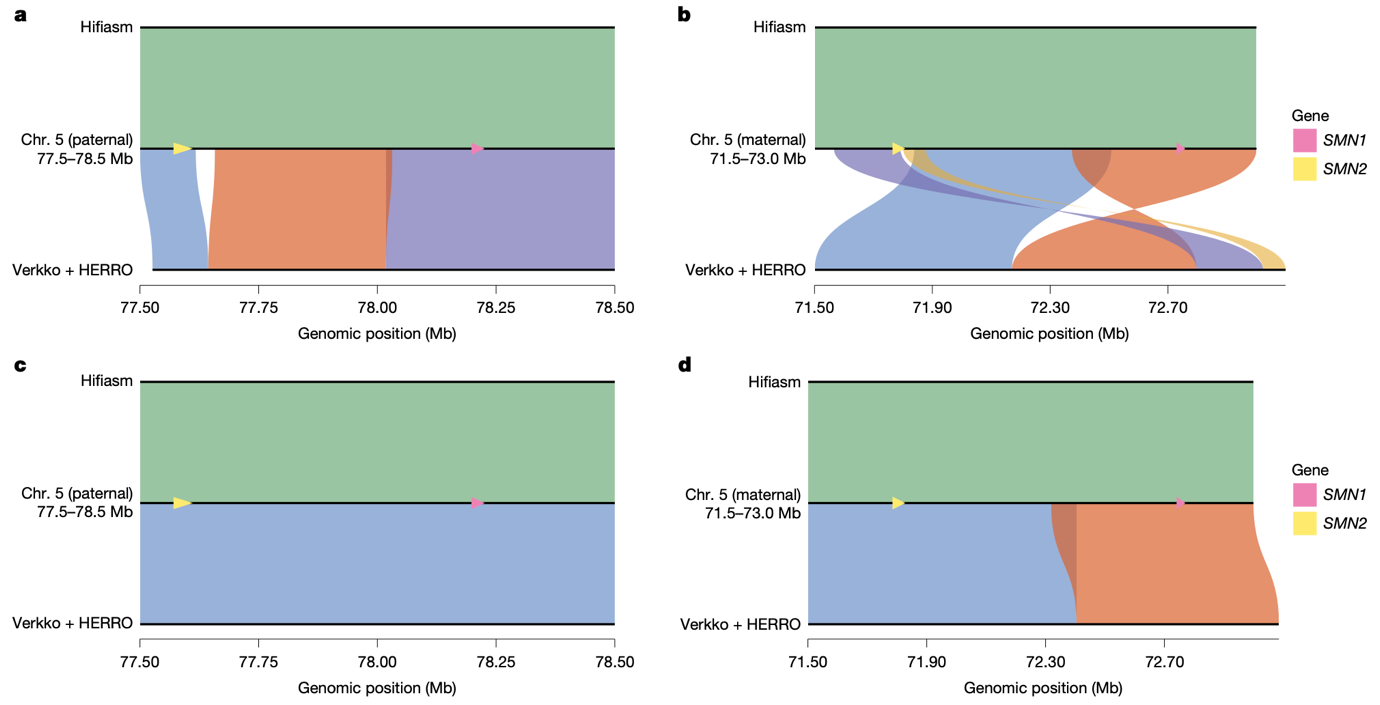
Figure 3. Comparison of HG002 assemblies across the SMN1 and SMN2 region.
hifiasm(ONT) assemblies (above reference) accurately reconstruct both SMN1 and SMN2 using ONT standard simplex reads, while Verkko+HERRO assemblies (below) show mis‑alignments and breaks. SMN1 and SMN2 are highlighted in pink and yellow, respectively.
Source: https://doi.org/10.1038/s41586-026-10105-6, Fig. 3
Why this matters for your project
This is the first demonstration that near‑T2T human genome assembly is possible using only standard ONT data – the same data researchers are already generating for routine sequencing. For clinical samples where ultra‑long reads are rarely feasible, or for non‑model organisms where DNA is limited, hifiasm(ONT) offers a practical, cost‑effective path to near‑T2T assembly that was previously unimaginable.
What hifiasm(ONT) Enables That Was Previously Impossible
|
Application |
Why hifiasm(ONT) Excels |
|
Clinical genomics |
Resolves disease‑relevant loci (e.g., SMN1/SMN2) from routine ONT data – no ultra‑long reads needed. |
|
Biodiversity & conservation |
Near‑T2T from field samples with limited DNA. |
|
Plant & animal breeding |
Cost‑effective T2T‑quality assemblies for non‑model organisms. |
|
Population‑scale projects |
Scalable to hundreds of individuals without GPU clusters. |
|
Repetitive region analysis |
Accurately assembles centromeres, telomeres, and segmental duplications. |
The Bottom Line
T2T assembly has always been possible – but only for those with ultra‑long reads and GPU clusters.
hifiasm(ONT) changes that equation. It proves that standard ONT simplex reads – the data you are already generating – are sufficient for near‑T2T assembly. It proves that phasing‑aware error correction can solve the recurrent error problem that has plagued ONT assembly for years. And it proves that CPU‑only computation can make T2T assembly accessible to every lab.
If you are still relying on PacBio HiFi or hybrid approaches – or if you have avoided T2T because ultra‑long reads were out of reach – hifiasm(ONT) is the breakthrough you have been waiting for.
Sailgene Solution: How We Can Support Your T2T Genome Project
At Sailgene, we specialise in helping researchers navigate the transition to high‑quality, long‑read genome assembly. Built on Nanopore and PacBio platforms with integrated bioinformatics capabilities, we provide end‑to‑end solutions for plant, animal, microbial, and clinical genomics.
Our capabilities include:
- Nanopore long‑read sequencing – standard ONT simplex reads optimised for hifiasm(ONT) assembly, with flexible data output to match your project scale.
- T2T genome assembly– full‑service assembly using hifiasm(ONT) and other state‑of‑the‑art tools, delivering near‑telomere‑to‑telomere continuity from standard ONT data.
- Haplotype‑resolved assemblies – phased, chromosome‑scale assemblies for diploid and polyploid genomes, enabling allele‑specific analysis.
- Complex region resolution– targeted assembly of centromeres, telomeres, rDNA arrays, and segmental duplications.
- Bioinformatics analysis– comprehensive QC, assembly validation, variant discovery, and annotation, with custom pipelines tailored to your biological questions.
Our T2T genome assembly services are designed for researchers who need complete, gap‑free genomes – whether you are working with human clinical samples, livestock breeds, plant cultivars, or wildlife species. We combine deep expertise in long‑read sequencing with cutting‑edge algorithms like hifiasm(ONT) to deliver assemblies that were previously unattainable without ultra‑long reads or GPU clusters.
Turnaround: 4–8 weeks (depending on genome size and complexity).
Contact us for a free consultation and a customised project quote.
Frequently Asked Questions (FAQ)
Q1: What is T2T genome assembly and why is it important?
A: T2T (telomere‑to‑telomere) assembly refers to the complete reconstruction of every chromosome from one end to the other without gaps. It is critical for studying centromeres, telomeres, rDNA, and segmental duplications – regions that are systematically missing from standard reference genomes and often harbour genes involved in disease, development, and adaptation.
Q2: Why is hifiasm(ONT) considered a breakthrough?
A: Previously, near‑T2T assembly required ONT ultra‑long reads (≥100 kb) and GPU‑intensive tools. hifiasm(ONT) is the first algorithm that achieves near‑T2T assembly using standard ONT simplex reads – the same data most labs already generate – and runs an order of magnitude faster on CPU‑only hardware.
Q3: What types of samples can benefit from hifiasm(ONT)‑based T2T assembly?
A: hifiasm(ONT) is valuable for clinical samples (limited DNA, ultra‑long reads rarely feasible), biodiversity projects (field‑collected specimens), plant/animal genomics(where ultra‑long sequencing is often impractical), and any project requiring high‑quality, gap‑free assemblies at scale.
Q4: Has hifiasm(ONT) been validated in published research?
A: Yes. hifiasm(ONT) was published in Nature on 4 February 2026. The study validated it across multiple human samples (achieving up to 22 T2T chromosomes), clinically relevant loci (SMN1/SMN2), and non‑human genomes including Arabidopsis and tomato. The assemblies consistently outperformed Verkko+HERRO and PacBio HiFi‑based approaches.
References
Jain,M.et al. (2018).Nanopore sequencing and assembly of a human genome with ultra-long reads.Nature Biotechnology, 36, 338–345.
https://doi.org/10.1038/nbt.4060
Logsdon, G.A., Vollger, M.R. and Eichler, E.E. (2020).Long-read human genome sequencing and its applications.Nature Reviews Genetics, 21, 597–614.
https://doi.org/10.1038/s41576-020-0236-x
Hemker, J.A., Gellert, H.R., Smiley-Rhodes, J.A., Kim, B.Y. and Petrov, D.A. (2026)Manual validation finds ultra-long-read sequencing best enables faithful, population-level structural variant calling in Drosophila melanogaster euchromatin with nanopore. G3 Genes|Genomes|Genetics, Volume 16, Issue 5, May
https://doi.org/10.1093/g3journal/jkag043
Zhang, X. et al. (2024).Nanopore ultra-long sequencing and adaptive sampling spur plant complete telomere-to-telomere genome assembly.Molecular Plant, 17(11), 1773–1786.DOI: https://doi.org/10.1016/j.molp.2024.10.008

Contact Us
If you are interested in our long-read sequencing services or potential collaboration, please contact us. Our team is ready to support your research with tailored solutions. We also welcome feedback from users to help us improve our services.

Contact Us
Add: One Innovation Drive, Suite B3-406, Worcester, MA 01605, USA
在线客服添加返回顶部
右侧在线客服样式 1,2,3 1
图片alt标题设置: SAILGENE TECHNOLOGY INC.
表单验证提示文本: Content cannot be empty!
循环体没有内容时: Sorry,no matching items were found.
CSS / JS 文件放置地